
Enter any keyword(s) to search our Blogs.
What is the best age to consider sleep coaching? Am I too late?
Understanding the optimal time to start sleep coaching can make a significant difference in the success of the process and the well-being of both your child and your family. Let's explore the research and guidelines to determine the best age for sleep coaching.
What is the best age to consider sleep coaching?
The research suggests that after a baby has passed the 4 /5 month sleep regression and and is rolling both directions(back to front and front to back) are closer to 6 months, they are then at a more optimal developmental age to learn their sleep skills. When they are rolling and closer to 6 months, babies have more mobility and demonstrate more sleep cues and have the hormone balancing to achieve sleep skills and longer sleep cycles.
For babies ages 0-5 months (newborn phase), it is typically recommended to wait on sleep training until the child is over 6 months of age. Newborn Education and gentle sleep shaping is more appropriate during the newborn phase.
Sleep Success Story: Baby is rolling, time to call Joanna and start sleep coaching!
Is my child “too old” to sleep train?
NO! I work with families with children 6 months to 6 years of age.
It is never "too late" for sleep coaching because sleep is a learned skill, and it's always possible to teach your child healthy sleep habits. Whether your child is a baby, toddler, or even school-aged, I can develop a tailored plan to address their specific needs and help them achieve better sleep.
Sleep is Natural, Right? Shouldn't Babies Just Know How to Do It?
One of the biggest misconceptions about raising children is that babies are born already knowing how to sleep well. The reality is that sleep is a learned skill. Our approach to guilt-free, Gentle Sleep Coaching® is to create the right environment and offer the right support for your child to easily and successfully learn how to sleep well.
Homework Done, Sleep Won: How Sleep Coaching Changed Our 7 year old’s Life
For families with older children, sleep coaching can be transformative as well. One of our clients shared how sleep coaching changed their 7-year-old's life, helping them balance schoolwork and achieve restful nights.
Lights Out, Brain On: Navigating the Sleepy Maze of School Age Slumber
Navigating sleep for school-aged children can be challenging, but with the right strategies and support, it is possible to ensure they get the rest they need for their growing brains.
Your Next Step
Determining the best age to start sleep coaching can set your child up for success. While the ideal time is often after 6 months of age, it's never too late to begin. At Blissful Baby Sleep Coaching, we are committed to helping your child learn the essential skill of sleep, no matter their age. With our personalized, gentle approach, we can create a sleep plan that supports your child's development and your family's well-being.
If you’ve been hesitating—wondering whether sleep coaching is right for your family—the Sleep Strategy Session is the first step.
It’s simply a focused conversation designed to:
Clarify your goals
Address both parents’ concerns
Create alignment
Determine your best path forward
You deserve rest.
Your child deserves consistency.
And alignment is what makes sleep sustainable.
Daycare Nap Drama? Let’s Fix This Without Wrecking Bedtime

Toddler Dropped Naps at Home — But Daycare Still Forces Nap Time? Here’s How to Protect Bedtime
Your child dropped naps months ago.
But daycare still pushes a daily snooze.
Now bedtime is sliding later.
Evenings feel endless.
Your child is wired.
And you’re longing for that old 7pm bedtime.
You’re wondering:
“Why are weekday bedtimes so hard when my child doesn’t nap on weekends and bedtime is easy?”
You’re not doing anything wrong.
You’re stuck in a system problem — not a parenting problem.
Let’s break it down and create a calm, realistic plan.
Why Daycare Still Requires Nap Time (Even for Kids Who Don’t Nap Anymore)
Here’s the straight truth:
Most daycares are required to offer a nap or rest period.
It’s not personal. It’s policy.
Licensing laws often mandate rest time.
Schedules are built for group management.
Teachers need protected break time and staff rotations.
Some centers allow quiet activities.
Others follow a strict “everyone on their mat” model.
The win here isn’t fighting the rule.
It’s understanding how flexible that rule might be.
How to Talk to Daycare About Nap Time (Without Conflict)
This isn’t a complaint.
It’s a collaboration.
If your toddler has dropped naps but daycare still requires rest time, the goal is clarity — not confrontation.
You might ask:
Can my child do quiet activities instead of sleeping?
Do they need to stay on the mat the entire time?
Can they get up early if they’re clearly awake?
How long is rest time really?
Some daycares have more wiggle room than they advertise.
You won’t know unless you ask — calmly, confidently, and clearly.
When parents and caregivers align, toddler sleep improves faster.
What to Do If Daycare Nap Time Is Non-Negotiable

If rest time can’t change, shift the goal.
We’re not aiming for sleep.
We’re aiming for low stimulation.
Consider sending a simple quiet-time kit (if allowed):
A few familiar books
A small coloring book
A simple puzzle
One comfort item (nothing exciting)
Bonus tip:
Ask if your child can rest near other non-nappers.
Less pressure = less accidental sleep.
Even reducing a nap by 20–30 minutes can dramatically improve bedtime resistance.
And if pickups or daily logistics are cutting naps short, you can read more about balancing naps with school schedules here.
How Daycare Naps Affect Bedtime (And How to Adjust Gently)
If your child naps at daycare — even briefly — bedtime will shift.
That doesn’t mean bedtime is broken.
It means sleep pressure has changed.
Here’s how to protect evenings:
Add calm movement after dinner (walk, light backyard play)
Push bedtime slightly later if needed (10–20 minutes, not hours)
Keep your bedtime routine boringly consistent
Same order.
Same cues.
Same calm energy.
This is how your child’s body learns:
Daytime rest does not replace nighttime sleep.
Small, steady adjustments work better than dramatic schedule overhauls.
If you’re navigating daycare sleep in general — including how to support independent sleep at home while honoring your parenting style — you may also find these sleep training tips for daycare parents helpful.
Is This a Sleep Regression — Or Just a Nap Transition?
This stage often gets mislabeled as a regression.
It’s usually a nap transition.
Some days your child will nap.
Some days they won’t.
Some weeks will feel messy.
That doesn’t mean you’re backtracking.
Transitions are rarely linear — but they are temporary.
Hold your home routine steady.
Communicate with daycare.
Adjust without panicking.
That’s how bedtime stabilizes.
The Big Reframe: It’s About Alignment, Not Control
You don’t need to “fix” daycare.
You don’t need to force naps away.
You need alignment — not perfection.
When parents and caregivers work together, children settle faster — day and night.
You’re doing the right thing by paying attention.
And yes — you can get bedtime back without blowing everything up.
If this feels trickier than it should, that’s usually a sign the schedule needs a second set of expert eyes.
And that’s okay.
Want a Second Set of Eyes on Your Child’s Sleep Schedule?
If daycare naps are colliding with bedtime and you’re not sure what to adjust first, you don’t have to figure it out alone.
In a 1:1 Sleep Strategy Session, we’ll look at your child’s full 24-hour rhythm, daycare schedule, temperament, and sleep pressure patterns. A Sleep Strategy Session helps you understand what’s happening and decide the next right step for your child’s sleep.
No cry-it-out.
No drastic overhauls.
Just thoughtful adjustments that protect both sleep and connection.
-
Because daycare naps — even short ones — reduce sleep pressure. When your child skips naps on weekends, bedtime is easier because they’re biologically ready for sleep.
-
Most toddlers drop naps between ages 2.5 and 4. Some transition gradually, especially in group care settings.
-
Start with collaboration. Many centers must offer rest time but may allow quiet activities or shortened rest periods.
-
Usually not. This is more commonly a nap transition — which can temporarily disrupt bedtime while your child adjusts.
Maternal Mental Health Day: Why Sleep, Support, and Small Shifts Matter
Maternal Mental Health Day 2026: A More Honest Conversation
Maternal Mental Health Day, recognized on May 6th, brings awareness to the emotional wellbeing of mothers.
But for many parents, awareness isn’t what’s missing.
What’s missing is space to be honest about how it actually feels.
Because maternal mental health isn’t just about diagnoses like postpartum depression or anxiety, it’s about the everyday reality of carrying so much, often without enough rest or support.
What Is Maternal Mental Health?
Maternal mental health refers to a mother’s emotional, psychological, and social wellbeing during pregnancy, postpartum, and early parenthood.
It includes:
Emotional balance and resilience
Stress levels and overwhelm
Access to support and rest
The ability to cope with daily demands
And importantly, it exists on a spectrum.
You don’t have to be in crisis for your mental health to matter.
The Invisible Load: Why So Many Mothers Feel Overwhelmed
Many mothers are navigating more than what’s visible.
This includes:
The mental load of managing schedules, needs, and routines
Emotional regulation for both themselves and their child
Constant decision-making with little downtime
Over time, this can lead to:
Increased anxiety
Irritability or burnout
Feeling disconnected or depleted
This isn’t a sign you’re failing.
It’s a sign you’ve been carrying a lot with no downtime and little support
How Sleep Deprivation Affects Maternal Mental Health
One of the most overlooked factors in maternal mental health is sleep.
Sleep deprivation directly impacts:
Mood and emotional regulation
Stress hormones and nervous system balance
Patience, clarity, and decision-making
When sleep is disrupted, whether from night wakings, regressions, or inconsistent routines, it becomes significantly harder to feel like yourself.
The Sleep–Mental Health Connection
Poor sleep increases anxiety and overwhelm
Fragmented sleep reduces coping capacity
Ongoing sleep deprivation can contribute to burnout
This is why improving sleep (even gradually) can have a meaningful impact on your overall wellbeing.
You Don’t Need to “Push Through” This
There’s often an unspoken expectation that mothers should just adapt.
To function on little sleep. To handle everything. To figure it out alone.
But mental health doesn’t improve through pressure.
It improves through:
Support
Rest (even imperfect rest)
Feeling seen and understood
You are not meant to carry this without support.
Gentle Sleep Support (Without Cry-It-Out)
If sleep has been a major stressor, it’s important to know:
You do not have to choose between your child’s needs and your own wellbeing.
There are gentle sleep coaching approaches that:
Support better sleep without leaving your child to cry alone
Maintain connection and responsiveness
Work gradually and sustainably
This allows both you and your child to get more rest, without going against your instincts.
Small, Realistic Ways to Support Your Mental Health
Improving maternal mental health doesn’t require a full life overhaul.
Start with small, manageable shifts:
1. Lower the Bar (Strategically)
Let one thing be “good enough” today.
2. Prioritize Rest Where You Can
Even going to bed 20 minutes earlier can help feel better the next day
3. Ask for Specific Support
Instead of just saying you “need more help”....try to get specific on what will make the difference
“Can you handle bedtime tonight?” or
“Can you take the baby for 30 minutes?
Can you empty the dishwasher
4. Create Micro-Moments of Pause
A few quiet minutes without input (noise, screens, demands) can reset your energy and attitude.
5. Reach out for support
You don’t have to navigate this alone—and you shouldn’t.
Here are trusted resources for maternal mental health support:
Maternal Mental Health Los Angeles (MMHLA)https://www.mmhla.org/
Postpartum Support International (PSI)https://postpartum.net/
Hello Alma (therapy search with insurance matching)https://helloalma.com/
Psychology Today Therapist Directoryhttps://www.psychologytoday.com/
Whether it’s a support group, a therapist, or simply someone who understands—connection matters.
When to Seek Additional Support
If you’re experiencing:
Persistent sadness or anxiety
Feeling overwhelmed most of the time
Difficulty functioning day-to-day
It’s important to reach out for professional support.
Maternal mental health is real, valid, and treatable.
You deserve care, too.
A Gentle Starting Point
For Maternal Mental Health Day, instead of asking:
“What do I need to fix?”
Try asking:
“What would support me today?”
Then let that be enough.
Who Should Be Involved in Sleep Coaching? Why Parent Alignment Matters

When parents start considering sleep coaching, one of the most common questions is:
Who actually needs to be involved?
Is it just mom?
Does dad need to participate?
What about grandparents or nannies?
The answer matters more than most families realize.
Here’s the honest truth:
Both parents. Full stop.
Not because everyone has to do everything.
Not because you need identical parenting styles.
But because sleep improves when the adults are aligned.
Why Both Parents Must Be Aligned for Sleep Coaching to Work
Sleep coaching lives and dies on consistency.
When one parent follows the plan and the other improvises at 2:00am because it feels easier in the moment:
Children get confused
Night wakings can increase
Progress slows
Frustration rises
Inconsistent responses during sleep coaching can unintentionally reinforce the very sleep struggles you’re trying to solve.
In fact, lack of alignment is one of the most common things that gets in the way of sleep coaching success.
But when both parents understand:
Why the night wakings are happening
What the plan is
How to respond calmly and predictably
Sleep begins to stabilize.
Alignment creates security.
Security allows sleep skills to stick.
What Happens When Parents Aren’t on the Same Page?
This is more common than you think.
One parent may feel ready for change.
The other may feel hesitant or protective.
Sometimes the hesitation comes from fear of cry-it-out.
Sometimes it comes from exhaustion.
Sometimes it’s simply uncertainty.
That’s normal.
But to a child, mixed signals feel unpredictable.
And unpredictability is the fastest way to stall progress.
You don’t need perfection.
You need alignment.
Should Grandparents, Nannies, or Other Caregivers Be Involved?
If someone:
Handles bedtime
Puts your child down for naps
Responds during night wakings
They should understand the sleep plan.
Anyone responsible for sleep routines needs clarity on how to respond.
Consistency across caregivers leads to:
Faster progress
Fewer regressions
Less anxiety
Greater confidence for everyone
Sleep becomes less of a daily negotiation and more of a rhythm.
How to Get Your Partner on Board (Without Conflict)
If you and your partner both want better sleep but disagree on the “how,” you’re not alone.
Here’s what helps:
1. Communicate the “why”
Sleep coaching isn’t about forcing independence. It’s about teaching sleep skills and supporting regulation.
2. Educate, don’t convince
Fear often fades with accurate information. Many parents worry about cry-it-out when that’s not even part of the plan.
3. Commit to consistency
You don’t need identical personalities. You need predictable responses.
4. Support each other
Some nights are harder than others. That doesn’t mean the plan is wrong.
Sleep is a team sport.
What Happens in a Sleep Strategy Session?
This is exactly why the Sleep Strategy Session exists.
It’s not sleep training.
It’s not a long-term commitment.
It’s clarity.
In a 60-minute Zoom session, we:
Assess your child’s full sleep history
Talk through what’s working and what’s not
Address both parents’ concerns
Explain the science behind the sleep struggles
Determine whether you need a simple reset or deeper support
No pressure.
No obligation.
Just a clear roadmap forward.
When parents leave aligned, sleep changes faster.
Frequently Asked Questions About Parent Involvement in Sleep Coaching
-
It’s possible, but progress is often slower and less consistent without alignment. Mixed responses can confuse children and reinforce night wakings.
-
Not necessarily every night. But both parents should understand and support the plan.
-
Gentle sleep coaching does not cry-it-out. Clear education about the approach often reduces that fear significantly.
-
Not intentionally. But inconsistency across caregivers can slow results. Clear communication prevents this.
The Bottom Line
Sleep coaching works best when the adults are united.
Not perfect.
Not identical.
Just aligned.
At Blissful Baby Sleep Coaching, you’re never doing this alone. We support the entire family—so your child can rest well, and you can too.
Your Next Step
If you’ve been hesitating—wondering whether sleep coaching is right for your family—the Sleep Strategy Session is the first step.
It’s simply a focused conversation designed to:
Clarify your goals
Address both parents’ concerns
Create alignment
Determine your best path forward
You deserve rest.
Your child deserves consistency.
And alignment is what makes sleep sustainable.
Understanding Sleep After the Infertility Journey

This week is National Infertility Awareness Week (#MoreThan), and I want to share why I’m highlight this topic.
Not as an expert from a distance…but as someone who has lived infertility struggles personally.
Yes, Infertility is part of my family’s story. I TOTALLY “GET IT” And it’s also part of the story for so many of the families I support.
Why I’m Writing This
I’m writing this because infertility is far more common—and far more emotional—than most people realize. Did you know?
About 1 in 8 couples struggle to get pregnant or stay pregnant
Nearly 1 in 5 women with no prior births are unable to conceive after a year of trying
Around 10–11% of women and 9% of men experience fertility challenges
And globally, 1 in 6 people will face infertility at some point in their lives
Infertility is not rare. This is not “someone else’s story.”Infertility struggles are happening quietly, all around us.
The Part No One Talks About: How Infertility Struggles Shows Up in Parenting
For many parents, the transition into parenthood after infertility carries an added emotional layer.
Not always visible. But deeply felt.
It can look like:
A heightened sense of responsibility
Fear of getting “ something wrong”
Difficulty tolerating distress (yours or your child’s)
A quiet pressure to “do it all right” after everything it took to get here
Your life has been shaped by uncertainty, waiting, wanting and often grief.
When the baby finally arrives, you want it all to be perfect.
Why Sleep Can Feel Especially Scary
Challenges with your child’s sleep is often one of the first areas where fear of “getting it wrong” shows up:
Because trying to “fix sleep” asks for something that can feel deeply uncomfortable:
Letting go of control
Allowing space or separation between you and your child
Trusting a process you can’t fully see or trust
Wondering if you are simply doomed to a “bad sleeper” and no-one or nothing can help you
For parents who’ve experienced infertility, these “emotional asks” can activate:
Fear
Self Doubt
Internal conflict
self-Judgement
Discord between parents on how to “solve it all”
Not because you’re doing it wrong, but because this can all feel heavier than expected.
Good News: You Don’t Have to Override Your Needs to Enjoy Good Sleep for your whole family
This is where many families feel stuck.
Caught between:
Wanting more rest
Not wanting to ignore their baby’s needs
But it’s not actually an either/or.
You can help your child sleep better in ways that are:
Responsive
Connected
Aligned with your values and goals
Gentle sleep coaching isn’t about withdrawing support.
It’s about shaping sleep with support still present.
If you’re navigating sleep while holding a deeper story underneath it, you don’t have to separate those things. There are ways to move forward that support both your child’s sleep and your emotional experience, at a pace that feels right for you.
Trust me, I really “get it” when it comes to parenting choices after infertility. I have lived it and for 14 yrs have supporedt parents through this very same transition. My process is slow, gentle, effective and takes into consideration your fertility journey and all your goals and hopes for your child and family life.
Book your sleep strategy session and let’s determine the right next steps for your child and your family.
At Blissful Baby Sleep Coaching, I believe that sleep is a learned skill, and every child is capable of learning it, with the right guidance and support.
Whether you’re a working parent juggling deadlines or simply a family in need of rest, know this: there is always help and hope available.
If you’ve been hesitating, wondering if sleep coaching is right for you, let me reassure you: the hardest part is deciding to start. From there, with expert guidance and your dedication, the progress will come quickly. This is your chance to transform your life in a way few other things can.
Ready to take the leap? Let’s talk about how sleep coaching can create your family’s transformation. You deserve this. Your baby deserves this. And your future self will thank you.
Let’s start with an easy first step, schedule a Sleep Strategy Session so me, you and your partner can have an 1 hr long zoom session so I can properly assess the sleep situation and determine if you need one-on-one sleep coaching support.
Let’s get your baby sleeping—and get YOU your sanity back.
If you are still wondering if I can help, please know I do NOT advocate 'cry-it-out'. I am a Gentle Sleep Coach. If you want to learn about my guilt-free and gentle process, please go to these links.
-
It can increase emotional sensitivity, anxiety, and pressure to “get things right,” which often shows up in areas like sleep and decision-making.
-
Sleep involves uncertainty and letting go of control, which can feel especially challenging after a journey shaped by waiting and unpredictability.
-
Yes. Gentle, responsive approaches support sleep while maintaining connection and aligning with your parenting instincts. Explore my Stairway to Sleep process.
-
Yes. Many parents feel torn between wanting rest and wanting to stay fully responsive. This is a valid and common experience.
From Fear to Freedom: How One Family Conquered Sleep Regressions—Twice
When this family first considered sleep coaching, their son was just 7 months old. Sleep wasn’t perfect—but it felt manageable. What stopped them from seeking help wasn’t uncertainty about sleep itself; it was fear.
Fear fueled by misinformation.
“We actually tried approaching sleep training at 7 or 8 months… but there was a lot of misinformation with the cry-it-out method, and that really scared us.”
So they waited. Like many parents do.
They relied on what worked in the moment—rocking, bottles, pacifiers, co-sleeping. Over time, though, those supports stopped working. By 15 months, their son was waking every 30–45 minutes, needing a bottle each time to fall back asleep.
“There was no sleep at all for those 3–4 months… He was drinking so much milk at night that he wasn’t even hungry for solids in the morning.”
They were exhausted, discouraged, and ready for an option that aligned with their values.
Gentle Sleep Coaching at 15 Months: The First Breakthrough
When we began working together, one thing mattered most to them: this could not be cry-it-out.
We moved slowly and intentionally. I explained the science behind sleep, how sleep pressure and circadian rhythm work together, and why reducing sleep crutches doesn’t mean abandoning a child.
“Joanna was very systematic. She made it clear this was not cry-it-out. It was a slow transition. We had to trust the process—and we did.”
And it worked.
Their son learned how to fall asleep independently.
He slept through the night.
He ate better during the day.
He woke up joyful.
“Now we see him waking up with a smile and going to bed happily. I can’t imagine life before this stage.”
What Causes Toddler Sleep Regression? Illness, Travel, and Big Changes
Just when things felt solid, life threw everything at them at once:
Hand, foot, and mouth disease
A new pregnancy
A major relocation
“All those sneaky sleep crutches we had completely eliminated—boom, they were back.”
At 22 months, they were facing frequent night wakings, bottles overnight, and a very overtired toddler. Even though they had already succeeded once, starting again felt vulnerable.
But this time, something was different.
“We made a whoops and a boo-boo and needed help again. But our confidence level was sky-high.”
Why the Second Sleep Reset Was Faster and Easier
Because they already understood the process, the second round of sleep coaching moved quickly—even with travel and mom being very pregnant.
“It was like sleep training an entirely new baby… but we had the process, so it was easier.”
Within days:
Sleep consolidated
Naps returned
And their son began asking to nap
“He literally walks to his bedroom, says ‘nap time,’ and asks to go into the crib.”
Life on the Other Side
Today, bedtime and naps are calm and predictable:
No bottles
No rocking
No resistance
Dad is fully involved.
Grandparents can handle bedtime confidently.
Everyone is sleeping—including mom, just weeks from delivering another baby.
“We finally get to eat together again. We hadn’t seen a movie in two years.”
“It feels like a privilege to put him to bed.”
Watch their full video story here:
Sleep Regression Doesn’t Mean Sleep Training Failed
If sleep unraveled after it was working, you didn’t fail—and neither did your child.
Regression during illness, travel, developmental leaps, or major life changes is normal. The key is knowing how to respond without panic and without undoing the skills your child already has.
How to Reset Sleep Gently (Without Cry-It-Out)
A Sleep Strategy Session is a 60-minute Zoom call where we:
Assess your child’s sleep history
Identify what caused the regression
Decide whether you need a reset or deeper support
Already Sleep Trained—but Stuck?
I created a Sleep Regression Guide specifically for families whose children already have good sleep skills but need a refresh during:
Illness
Travel
Developmental changes
Big life transitions
Download the Sleep Regression Guide
You’re not back at square one.
You’re just at a reset point—and support makes all the difference.
-
Hello, I'm Joanna with blissful baby sleep coaching. And we're here with another success story, their son. They first came to me when their son was 15 months old. We totally successfully sleep trained him and nap trained him, and it was awesome, right? Yeah. And then little guy got really sick with hand, foot and mouth. They were also in a big transition with possibly moving. And so all those sneaky sleep crutches that we had completely eliminated, boom, they were back.
Yes. We actually then had to do a second session, if you will, of sleep training again when he was two months old. 24 months old. 22 months old. 22 months old, yes. So as we're going through the sleep success story, I just wanted everyone to kind of understand that they've got two really unique perspectives on doing sleep coaching with a 15 month old and doing a sleep coaching with a 22 month old, which are two entirely different creatures.
So my first question always is, what was life like before you called me? Yeah. So we actually tried approaching you at seven, eight months when our baby was that old. And there was a lot of misinformation with cry it out method. And that was something that really scared us. And then we ultimately decided to not go through with it. And life at the time seemed okay. Like we were involuntarily bringing on a lot of crutches just to make him sleep and keep him asleep, which we didn't know at the time that we were doing like we were rocking, we were singing, we're doing like a bunch of things, which seemed harmless, which is harmless.
And we had the bottle, we had the pacifier, we had like a bunch of things that were going on to try and get him to stay asleep. And we continue to do that for a year, until he was a year. And then we had a big trip where we co slept for like a month and a half or something. And after that he just would not go back to his crib.
And it. It was almost two to three months until he was 15 months that we had to go through that process where he was asleep with us in the bed at first, but then he'll keep on waking up during the night. So he will only sleep for about 30 to 45 minutes at a time. And then he wake up and he'll ask for a bottle and then he fall asleep on the bottle.
And what ended up happening was he was having just so much milk at night that he was not eating enough in the morning time. So like whenever we would try to introduce food, solid foods, he would just not Accept it because he was getting all of those calories at night. And so it was like a pretty bad cycle of giving him the bottle, trying to keep him asleep for both of us.
There was no sleep at all for the three, four months that we went through it. Yeah. And then ultimately we kind of went back and we looked at Joanna for help. Yeah. And Dad, I also remember during that time that maybe, like, it was getting harder for you to help him with go to sleep or go back to sleep. Wasn't he kind of getting mommy preferenced where your son was like, even though you were co sleeping and doing all the things, he was always, like, wanting mom instead of like, you?
Yeah, yeah. No, I think it was. It was super hard, you know, almost so much so that I was like questioning, like, come on, like, baby, why are you not sleeping with me? But. But yeah, it was super hard. And I think we were not sleeping enough like Utra said. And, you know, that was making us irritable as well. So it was. Don't imagine that life again. Yeah, exactly.
Yes, exactly. Like just irritable. And nothing was working. Okay. And then mom, you had said that you, you know, initially at seven months, you were like, I don't want to do cry it out. That's all I see in the marketplace. Yeah. That's why you didn't make any changes at seven or eight months. But then here you are at 15 months now you're desperate. Like, now you've gone way down.
Like, your ability to tolerate what's going on. Like dad said, like, highly irrit. No sleep. Yeah. So then you were like, all right, I've got to find an alternative to cry it out. So you found me because I'm a gentle sleep coach. And so what was it like to, you know, get that support, that. How did that feel for you to. So I think first of all, what I want to say is that Joanna is very systematic.
Like, so even before we started the coaching, I remember that you had asked us to do like a log of everything that he does. So that kind of first of all gave us the idea that we are in the right path. Like, you know, we are working with someone who actually knows what to do and like it. You made it very clear that this was not a cry it out method.
This was a slow transition. And of course we had to keep an open mind that there is, whenever there is transition, whenever there is change, a baby is going to resist. So we, we had to trust that and we went with the flow at the time to, you know, Kind of get that understanding in because we didn't know that we had introduced all of these crutches that were crutches.
Like, we didn't even know. We just thought that was just part of how a baby sleeps because everybody does it. Yeah. So I think that's. That was one thing that immediately kind of hit that once you started with the coaching process, we kind of got the understanding of what we are supposed to do, the bare minimum things that we're supposed to do versus everything else that we were doing.
But. Yeah. Do you want to add something else? Yeah, no. I mean, it was, it was crazy. Like, you know, I even learned about, like all the different cycles of sleep. Like, you know, who knew like all of that existed? Right. So when you start learning a little bit more about the science behind, you know, what happens and why it happens, I think it sort of gets you to a stage of then starting to figure out, okay, now how do we use that understanding, you know, to give the baby, you know, what he really needs, which is a good amount of sleep so that he's actually excited.
Even he was not doing well. Like, he was irritable, like when he would be up. Like, I mean, now we see him, you know, after that he's deep trained, like waking up with a smile and like going to bed, like happily. Like, you know, like I said, I can't imagine, you know, life before the stage. Yeah. Like, we're at the point now, you guys, where he literally reaches for his crib and he tells his parents that he is ready for his nap.
Yes, correct. Walking towards the bedroom, saying, it's nap time. Yeah. Not in a million years did anyone expect that result that, that, that we were able to use, you know, behavioral science and sleep science to really match it with what his needs were. Yes. Move in very, very incremental small steps. Yeah. You know, and like I said, like we did it once when he was 15 months and you guys had a great run where everything was great for several months and then the illness came and then you by accident reintroduced sleep crutches and this happened.
So I think it's an important topic because a lot of parents will say to me, oh, my God, if I do this with you, am I ever going to have to do it again? And I say, it depends. And they go, what? And I say, well, if we find out your child is highly sleep crutch prone, if you reintroduce the crutches for too long and consistently, like bedtime at, you know, each interval all night long, then yes.
That child will gladly take as many sleep crutches as you're willing to offer, and you will have what's considered a full sleep regression, meaning your child wasn't waking up at night, and now they're waking up again four or five times a night. Yeah. And that's what happened to you guys. And it was hard, but also knew you could come back to me for help. That there was no shame.
Yeah. There was no judgment. It was like, you know what? We made a whoops and a boo boo and we need help again. And when we worked again, like, your confidence level was, like, sky high. You're like, we know. Yeah. Yeah, exactly. I think that's. That's a very good point that, you know. First of all, during this age, right between one and two years, the baby's personality is changing every month.
So he definitely was not the same baby at 15 months as he was at 22 months when we started again. When we were, you know, during that phase of regression plus illness that we went through at 15 months, we kind of understood very quickly that we made the boo boo. Like, we should not have done those things because we've noticed it consistently that our baby thrives with consistency.
Like he wants a schedule. And having known that if he had just been a little more resistant to the changes that we were, because we actually introduced the changes, he probably didn't even need it. So that was like, a lesson that we learned after the fact that, okay, we made this mistake, but we know exactly what we did wrong that got us here. And I think at the time, I was also pregnant, and there was, like, some priorities in terms of, like, emotionally I was just unable to hear him cry.
So, like, I felt the need to go and grab him and just stop the cries for, you know, even a little bit. So I think it was kind of an emotional time as well for me that we thought, okay, you know, it's okay. The main thing is that he sleeps, and I don't care for now. So we'll just do what we do, and then we'll figure out once he's a little more, you know, aware, and then, you know, we reintroduce it.
So now, like, when do we know that? What is the right time to do it again? So I guess, you know, that's also important to know that, you know, your baby will actually tell you in many ways that he wants to sleep better. And like he said, the main change that we noticed was that he was a happier baby when he was sleeping through the night. And and then, like, we started noticing that he was just getting really, really cranky.
And, like, he was, you know, very irritable. You know, he was not happy at all. At bedtime, he would wake up grumpy. And at 22 months, like, he was also having a speech burst at the time. So we kind of figured out that this is the right time to do it, even from, like, very heavily pregnant point of view, that we wanted to make sure that before the second baby, yes, he is sleep trained.
And that was kind of the window that we found that this is, like the perfect window right now that we give him a couple of months and he will be able to master it. And we saw, like, the things that we did the first time around, and we incorporated a lot of those now. But I want to reiterate that he was not the same baby. He was an entirely different baby at 15 months, and he was an entirely different baby at 22 months.
So it was like sleep training, an entirely new baby. But we knew the process, so it became easier for us to actually go through with it. And we made success pretty soon. And that is the most important thing. So. Yeah. Yeah. And exactly. And again, if there's ever a regression, parents will also say, okay, well, if I have to sleep train again, like, how quickly can they learn?
And I say, very quickly. I mean, usually within a week, we're seeing massive improvement. Yes. And then towards full mastery, where you're getting the beautiful, you know, life that you're getting now. You know, I mean, within two weeks. And now it's been six weeks where he's sleeping through the night and taking impeccable naps. So why don't you tell everyone what sleep looks like now? So it's amazing. First of all, there are no res.
There is no resistance to wanting to go to sleep. He knows it's part of his daily routine. He understands that there is, like, a pattern that he needs to follow, and he's happily doing it. He plays when he plays, and when it's time to sleep, he understands that he has to sleep. And he, you know, we start his night routine at around, you know, 6, 30ish, typically. And he knows, like, once the night routine has started, you know, this is the pattern.
Like you do A, B, C. Like, it's kind of like that. And then he has to go into the crib and then he has to fall asleep. And there are days when he would just be like, I, I just want to go to sleep. And he will tell us that, you know, you can just Put me in the crib and bye. Bye. So he's gotten to that stage in the afternoons.
He's like his own nap captain. He will be like at 12:30, he's like, okay, bye, I'm done. And then he'll just go inside to sleep. So yeah, he's gotten really good at it. He sometimes will have some arousals in between. Like if he's startled by a sound or something, he would wake up. But then now we are known to the process and you know, we know not to disturb him.
So he has mastered his sleep skills so well that he can actually now go back to sleep on his own. And you know, those, those things are important to know as parents. And I think first time parents, we are, you know, overly cautious. You know, he's sleeping so well, but we still have the baby monitor on all the time and we are still, you know, constantly watching him.
We don't have to anymore, but we still do it. And so like we, we see that, you know, even if he tosses and turns and you know, there are times that he'll actually sit up and he'll just look around, but then he'll fall asleep again. So like that's, that's, that's like great transition that we are seeing now in our baby and like amazing mood. So it's, it has so many benefits.
Like his mood is great, he's eating well, which was another, you know, point of concern that we had initially. His, you know, milk intake has gone really down, which is another thing that we wanted, like, we wanted him to have other foods and not just rely on milk. So yeah, so all of those things like, are great positives that we have seen just from sleep training. Like there are so many things that are interrelated to one part.
And I think you also said you got the speech burst. Yeah, yeah, that was a big one. Right? So like, you know, when your child's, you know, between 15 and 18 months, some speech starts coming and you guys were like, what? We want more, we want more speech. And then once we trained him again, like the speech started just, you know, pouring out, which is. Yeah, so if, like, so now we know that life is better.
We know that the second baby is coming any day now, which is amazing. The parents have been integrated. Dad, you've been integrated. So talk about what it was like to now be in a situation where like you can handle the everything. Like you, if, if mom's in the hospital and you're home with your son, like no problem. Like talk about that super Easy. Well, it was not the case like before we did this, but, you know, same thing, right?
Like, he knows when he wants to go back in and get his nap. Or like, you know, he knows when it's like, you know, sleep time at night. So the schedule is the same. Like, he does it now with any of us in the family, which is. Which is amazing because there used to be a preference that he had for mom. You know, it feels great to be able to do this with your son.
And, you know, that's, I guess, the. On the emotional side of things, like, you know, you feel good about it yourself in a way that you're able to do this and your son's been sort of able to spend time, know, with you, like, read a book, you know, get him to bed. I think all of that is. Sounds super simple, but it's. It's actually a privilege. It is a privilege.
And I often say to families, like, when. When you have a situation where you kind of had a mommy preference going on, the dad often feels like really on the periphery. Even though dad wants to be totally involved, the baby kind of creates this, like, barrier. It's kind of an invisible barrier. And so then the dad kind of has this feeling like, well, whenever I try to help, I actually make things wor.
Right. And so now the benefit of sleep training is what we get is dad and baby are bonded. Dad and baby trust each other. Dad and baby have their own cute little pattern. Dad gets to have that beautiful experience of reading the book. I mean, there's just never. There's nothing better than sitting with your kid on your lap reading a book, and then a final kiss. Put him in the crib, walk out the door and be like, it's 7:30.
Yeah. Yeah. I mean, it just is, right? I mean, it's such a massive accomplishment. Yeah, yeah, yeah. And I. I want to actually say, you had told me when we had started the process that he needs to have association with the routine and not the person. And not the person. Yeah. And that was something that we didn't really think how important it was at the time. Now we do that.
It really doesn't matter if I'm doing the routine or he's doing the routine or any of the grandparents is doing it or the neighbor is doing it. Like, he's actually fine. He go to sleep because he knows that he has to take a bath, he has to read a book, and then he has to go to the crib and he has to sleep all night. Like, he knows that.
So that's amazing. Amazing. So what's possible for you guys now that literally was not possible before working with me? Yeah. I think eating together is the main one for us. So we were never able to eat together at the same time for the longest time because one of us was always on call with our baby. And that's changed. Now we definitely get to spend some evenings together, which is amazing.
You know, just talk, actually about anything, which has been great. Yeah. Watch tv. Yeah. A bunch of different things that we had not caught upon over the last couple years, so. Yeah. Last couple years. Yeah. Oh, yeah. We had a lot to catch up in the last 20 years. Yeah. Yeah. Like, we hadn't seen a movie in two years, so. Yeah. So just getting able to start a movie and finish the movie the same night, that was like, wow.
I know, right? So simple pleasures. Okay, cool. So when you guys. If you guys ever bump into a family that is either scared to do sleep training or doesn't believe it's going to work for them because their case is too hard or they have a misperception that the only way to sleep train is cried out, like, what. What do you guys. I'd love dad to share first. Like, what do you guys want people to know about.
About it if they're like, I don't know. Yeah, we were just joking about it. Right. Like, you know, I'm gonna show him. Show the. Show the family, like our kid, you know, sleeping soundly and. And tell them that this is what is possible. Right. And you can actually go, you know, have dinner, watch a TV show or, like, watch a movie, like, while that's happening, and actually get your life in order.
And more importantly, get some sleep. If you want to get some sleep yourself and actually wake up with your kid and have the energy to play with the kid. So I think that's what is really possible. And having gone through this now a couple of times, I would say that we were actually apprehensive the first time ourselves. And it wasn't necessarily easy. We had to learn, we had to teach, and we had to go through the process.
So it's going to be a journey, and that's going to be the key. And it's really good for the baby, it's good for the parents, it's good for everyone else in the household, and, you know, that's ultimately what you want. Yeah. How about you, Mom? Yeah, I completely agree that it's a journey. It's going to be a slow transition. We had spoken about it initially as well, that Even though it's not a cry it out method, there are going to be some cries because our babies are smart, like they are going to be resistant to change.
They want, you know, things the easy way. They. So it's when, when we take some of those pleasures away, it's not going to be great. Like even as adults we don't like it. So. So it's going to be a slow transition. There are going to be some cries realistically. But like having gone through the process now and it's been like two months of a sleep trained baby, those four or five days in the initial days when we were sleep training him and there were some cries, they seem like a distant past now because the baby is just doing so well.
He is in great mood. He's, you know, doing well all over, all around. And I think when you look at that, it's like a small price to pay. But that's a price that we pay as parents because to be very honest, the baby is fine. Like we have to accept the fact that it's not, you know, a cried out method where they are completely abandoning the baby and just leaving them to fend for themselves.
Like that's not what we are doing here. This is a slow, easy, gradual process that is even acceptable for the child. Like they understand, they see you, they understand that there is a change going on. They are going to be resistant to the change at first, but I promise you that they will accept it and that this is great for them in a lot of ways. Exactly. And I think that's really important to say is that there is no such thing as a.
No. Yeah. No crying. And the way I like to, because the word crying can be very triggering. So it's like the word for me is more like level of protest. Like. Yeah. Are they protesting because they're frustrated? Are they processing because they're confused? Yeah. Protesting because you're being super inconsistent and they don't know what you're doing. So there's, you know, the way I work is really deep in decoding the nature of the protest so that we can respond appropriately.
And that's the key thing is always looking at what the trigger is and how we can respond appropriately in order to still make progress. Yeah. Still able to offer support, verbal support, physical support. We're physically in the room, we're available to them. Yeah. It's not giving them the crutch every single time. Yeah, yeah, exactly. Skills to be built. Yeah. Awesome. Well, thank you so much for sharing your story.
You're, you're two time, two time winner. And I think you have learned well and it will be great because now your baby's sleeping and now when you go to have, you know, your new family member coming any day now, you can do this with confidence that your child is home and sleeping well and anyone can put him to sleep, which is amazing. Yeah. Yeah. We are so excited about that.
This definitely was the main point of concern for us, you know, with. With a new baby coming in. So, yeah, I just want to say to the moms out there that, you know, just be patient. You know, we are all doing the best that we can. And, you know, this is a great option to actually consider because we are seeing the change in our baby that just sleep can bring.
So, like, sleep is connected to so many things of, you know, being well all around. And once we fix that small, tiny thing, it just changes to your baby. Yeah, exactly. Okay. Well, thank you so much. Yeah, thanks, Joanna. Okay.
Best Investment Ever: Hired Joanna for Both Kiddos.

Best Investment Ever. 2X Over
When parents experience real sleep—blissful, predictable, sustainable sleep—they want it for every child in their home.
That’s exactly what happened for Myra and her husband.
Not once.
Twice.
Working with a tenured sleep expert two times showed them something powerful:
sleep coaching doesn’t just change nights—it changes everything.
The First Time: Survival Mode
When Myra first reached out, her 18-month-old had never slept through the night.
They had just moved.
Started a new daycare.
Both parents were exhausted and barely functioning.
“We were struggling with meal prepping because we were so tired all the time. We were just getting takeout, spending too much money. Our house was a mess. We were having trouble concentrating at work,” Myra recalls. “Our son had behavioral issues because he wasn’t sleeping. Everyone was grumpy.”
They weren’t failing as parents.
They were sleep-deprived.
After a few weeks of tailored sleep coaching, everything shifted:
Their toddler slept through the night
Their home felt calmer
Their energy returned
And for years, sleep stayed solid.
The Second Time: Trusting the Process
When baby #2 arrived, they didn’t wait for rock bottom.
This baby was calmer—but still struggled with night wakings and naps.
And this time, Myra was also navigating postpartum depression and anxiety.
Her therapist was clear:
Healing requires consolidated sleep.
They reached out when their son was six months old—ready to begin.
But here’s the key difference with experienced, ethical sleep coaching:
Readiness matters.
He wasn’t quite there yet.
He had just started wearing a cranial helmet (causing overheating)
His mobility wasn’t fully developed
So we waited.
One month later—at seven months—he was ready.
That patience made all the difference.
(Assessing readiness—of both child and parent—is a core part of my Stairway to Sleep™ process.)
Why Customization Changes Everything
Sleep coaching is not one-size-fits-all.
Each child.
Each season.
Each family.
“What I love about working with Joanna is that we always had a tailored plan,” Myra says. “We knew exactly what to do, what to look out for, and how to adjust as we went along. That was so helpful.”
That flexibility allowed her to support her baby’s sleep and protect her mental health.
The Results: Life, Reclaimed
Today:
Two hands-free naps a day
Sleeping through the night
A calm, thriving household
Myra shared that…“I can actually have time for myself now. I can have a quiet dinner, go to bed early, take a shower, and just decompress,” she shares. “I was even able to attend a work conference in another state because my husband and our nanny could put both boys to sleep without an issue.”
She even traveled out of state for work, confident her husband and nanny could handle bedtime with ease.
And here’s the part that matters most:
With their first child, they had considered quitting their jobs and moving closer to family.
Once sleep improved?
They realized they loved their home, their new community, their careers, and their new life.
Sleep deprivation had been clouding everything.
“The Best Investment We Ever Made”
For parents on the fence, Myra says it best:
“We did this twice, with two very different kids at different ages, and both are still great sleepers years later. It was the best investment we ever made. Sleep deprivation clouds every aspect of life—your marriage, your work, your mental health. When that burden lifts, everything changes.”
Sleep isn’t a luxury.
It’s a foundation.
And with the right guidance, it’s absolutely within reach.
Ready to See These Benefits in Your Family?
Sleep coaching isn’t about control or discipline. It’s about creating the right environment and circumstance, using proven sleep science and attachment theory, and responding with sensitivity so your child can learn the essential skill of sleep. And in the process, your relationship grows stronger than ever.
Book your sleep strategy session and let’s determine the right next steps for your child and your family.
At Blissful Baby Sleep Coaching, I believe that sleep is a learned skill, and every child is capable of learning it—with the right guidance and support.
Whether you’re a working parent juggling deadlines or simply a family in need of rest, know this: there is always help and hope available.
If you’ve been hesitating, wondering if sleep coaching is right for you, let me reassure you: the hardest part is deciding to start. From there, with expert guidance and your dedication, the progress will come quickly. This is your chance to transform your life in a way few other things can.
Ready to take the leap? Let’s talk about how sleep coaching can create your family’s transformation. You deserve this. Your baby deserves this. And your future self will thank you.
Let’s start with an easy first step, schedule a Sleep Strategy Session so me, you and your partner can have an 1 hr long zoom session so I can properly assess the sleep situation and determine if you need one-on-one sleep coaching support.
Let’s get your baby sleeping—and get YOU your sanity back.
If you are still wondering if I can help, please know I do NOT advocate 'cry-it-out'. I am a Gentle Sleep Coach. If you want to learn about my guilt-free and gentle process, please go to these links.
The Blissful Baby Stairway to Sleep
Please join my Sleep is Bliss Tribe in Facebook, Instagram and LinkedIn so we can stay connected and you can continue to get amazing resources on sleep and family wellness.
Sleep is Bliss, Let's Get you more!
My WO3 Day Purchase: Bringing Spring Home with Farmgirl Flowers
In honor of WO3 Day, I’m excited to share my favorite flower delivery service. It's one that brings a lot of smiles and joy to the people who receive it, a stunning bouquet delivery from Farmgirl Flowers.
Recall that each March, our incredible community at WO3 Connect celebrates WO3 Day by intentionally supporting women-owned businesses.
This year, we’re keeping it beautifully simple with a collective commitment to take three small actions to help small women-owned businesses in the month of March:
One Share Share a women-owned business with your network.
Post about them on social media, send their website to a friend, or tag them in a story.
A single share can introduce someone to a business or service they truly need.
One Purchase Choose to buy from a women-owned business today.
Whether it’s a product, a service, or booking a consultation, your purchase directly supports the hard work, creativity, and dedication of women entrepreneurs.
One Review Leave a positive review on yelp or google reviews for a women-owned business you love.
Reviews help businesses build trust, improve visibility online, and make it easier for new customers to discover them.
These small actions help shine a spotlight on the incredible women building businesses, serving communities, and making a difference every day.
So for my WO3 Day Purchase, I chose to send flowers from Farmgirl Flowers, a women-owned business known for its stunning, thoughtfully designed floral arrangements that bring so much joy to the people who receive them.
Why I Chose Farmgirl Flowers for My WO3 Day Purchase
Farmgirl Flowers was founded by entrepreneur Christina Stembel with a mission to make stunning, thoughtfully sourced floral arrangements more accessible.
I love supporting women who build something meaningful from the ground up, and Farmgirl Flowers is such a wonderful example of that entrepreneurial spirit.
But beyond the mission, what truly sets Farmgirl Flowers apart is the experience.
But honestly, the real magic happens when that box arrives at the door.This is not your typical flower delivery.

The Joy of a Farmgirl Flowers Delivery
From the moment the box arrives, it feels different. There is something special about it before you even open it. The packaging is beautiful and intentional, often wrapped in their signature burlap, which immediately sets it apart.
And then you open it.
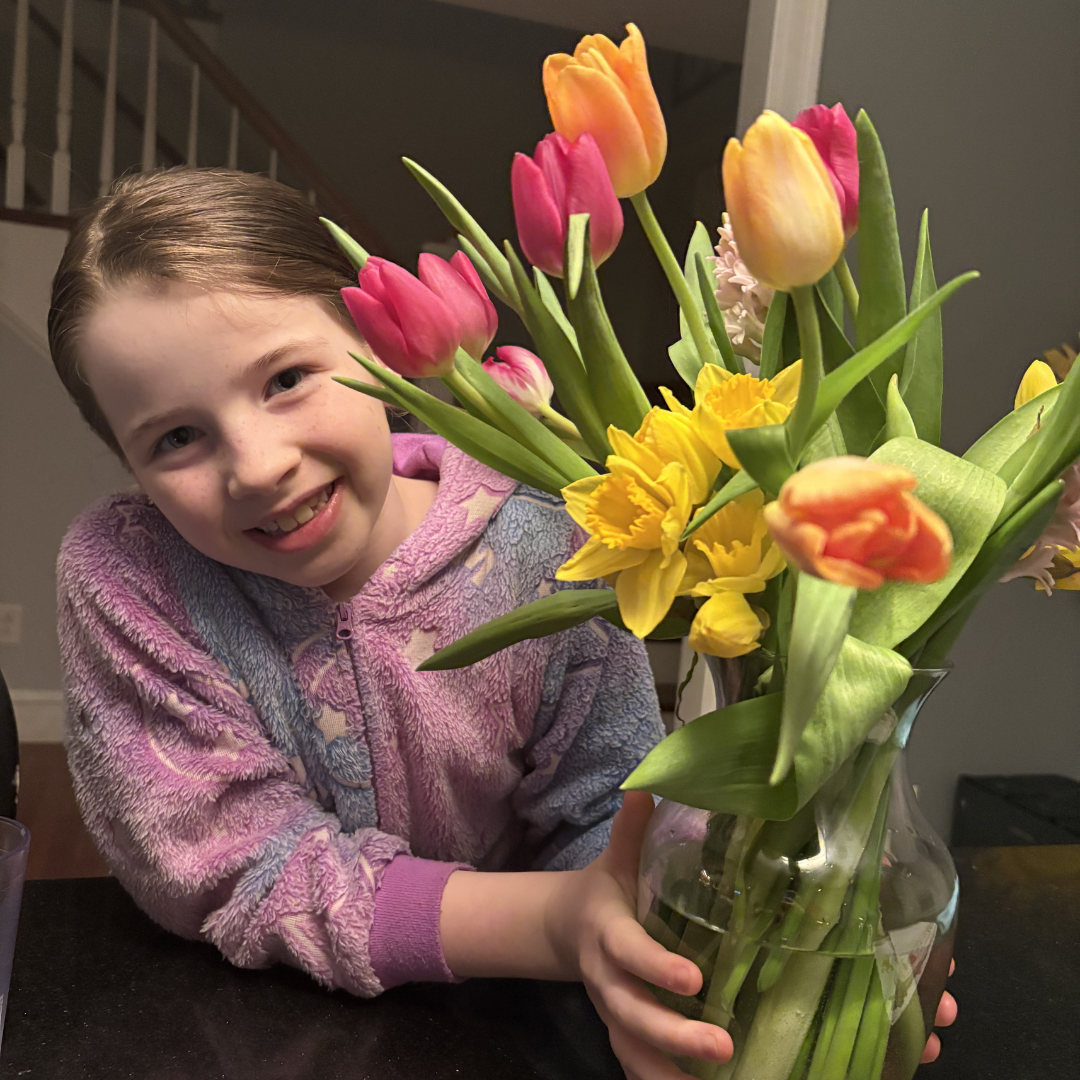
The flowers are incredible. Not filler flowers, not sparse arrangements, but full, abundant, high-quality blooms that LAST and LAST. What you see when you order is truly what you receive, and often even more.
In fact, one delivery easily filled three full vases in our home, each one stunning in its own way. The variety, the freshness, and the quality are unmatched. These are healthy, vibrant flowers that last.

A Family Experience, Not Just a Delivery
One of my favorite unexpected parts of these deliveries is how much the whole family enjoys them.
The kids love helping arrange the flowers, choosing their favorites, and deciding where each vase should go. It turns into a simple but meaningful moment at home, creating something beautiful together.
It even sparks curiosity, asking about the different types of flowers, wanting to grow them, and learning to appreciate them.
And I have noticed something else too. When you send these to someone, they remember. It often becomes their go-to flower service moving forward. It creates a ripple effect.
A Little Bit of Spring Delivered
This WO3 Day delivery was incredibly appreciated in our home.
The color, the freshness, the life it added to our space, it instantly lifted everyone’s mood. Fresh flowers have a way of transforming everyday moments into something a little more special.
And knowing that this purchase supports a women-owned business makes it even more meaningful.
Supporting Women-Owned Businesses One Choice at a Time
One of the things I love about WO3 Day is that it reminds us that supporting women entrepreneurs doesn’t have to be complicated.
Sometimes it’s simply choosing where you shop.
My WO3 Day purchase was Farmgirl Flowers, and it delivered on every level, beautiful flowers, meaningful moments at home and those I sent them to, and support for a woman-led business.
Join Us for WO3 Day
If you’d like to participate in WO3 Day too, here’s the simple challenge by the end of March:
Share a women-owned business
Purchase from a women-owned business
Leave a review for a women-owned business
These small acts of support create a powerful ripple effect for women entrepreneurs everywhere.
And if you are looking for a way to brighten someone’s day, or your own home, I cannot recommend Farmgirl Flowers enough.
Because sometimes the best purchase is one that brings joy, connection, and a little bit of spring into your home.
Today Is WO3 Day: One Share, One Purchase, One Review

Today we celebrate WO3 Day, a day dedicated to celebrating women-owned businesses. Our community at WO3 believes that when people support a woman-owned businesses, amazing things happen., Opportunities are created, visibility increases and businesses thrive thru actions of others.
We want supporting women-owned small businesses to become second nature — just like what we see with Small Business Saturday.
When Small Business Saturday comes around, people know exactly what to do: shop local, support small businesses, and spread the word. The impact is real and visible every year.
We believe women-led businesses deserve that same level of intentional support.
Let’s build this to the level of Small Business Saturtory.
That’s why this year we’re keeping the celebration simple, intentional, and powerful.
So Today, take a moment to take three small actions:
One Share
Share a women-owned business with your network.Post about them on social media, send their website to a friend, or tag them in a story.
A single share can introduce someone to a business or service they truly need.
One Purchase
Choose to buy from a women-owned business today.Whether it’s a product, a service, or booking a consultation, your purchase directly supports the hard work, creativity, and dedication of women entrepreneurs.
One Review
Leave a positive review on yelp or google reviews for a women-owned business you love.Reviews help businesses build trust, improve visibility online, and make it easier for new customers to discover them.
Simple steps — but when we do them together, they create a ripple effect that can make a real difference.
Why These Small Actions Matter
Running a business often means wearing a lot of hats. Marketing, customer service, operations, content, finances — the list never seems to end.
For many women entrepreneurs, word-of-mouth support is one of the most powerful ways their businesses grow.
A simple share on social media might introduce someone to a service they desperately need.
A purchase supports the hard work and dedication that goes into building a business.
A review helps future customers feel confident about choosing that business.
These small acts don’t just support businesses — they help connect the right people to the right solutions at the right time.
Sometimes the smallest actions can create the biggest impact.
And that’s powerful.
My WO3 Day Challenge to You
Today, I invite you to take just a few minutes and participate in WO3 Day.
Choose one women-owned business and:
✔ Share widely a post from their on social media
✔ Purchase a product or service from them- if you can
✔ Leave a review on yelp or google reviews for their business
It doesn’t have to be complicated. It does not take much time, nor money. Think of a woman-owned business who helped you recently, a product you love, or a business owner whose work deserves to be celebrated.
Your support might mean more to them than you realize.
Let’s Lift Each Other Up
One of my favorite things about being part of the WO3 community is the spirit of collaboration over competition.
When we lift each other up, we all grow stronger together.
So today, let’s celebrate WO3 Day by sharing, supporting, and spreading the word about the incredible women who are making a big difference through their businesses.
Because sometimes the simplest actions — one share, one purchase, one review — can create a ripple effect that lasts far beyond today.