
Enter any keyword(s) to search our Blogs.
From Fear to Freedom: How One Family Conquered Sleep Regressions—Twice
When this family first considered sleep coaching, their son was just 7 months old. Sleep wasn’t perfect—but it felt manageable. What stopped them from seeking help wasn’t uncertainty about sleep itself; it was fear.
Fear fueled by misinformation.
“We actually tried approaching sleep training at 7 or 8 months… but there was a lot of misinformation with the cry-it-out method, and that really scared us.”
So they waited. Like many parents do.
They relied on what worked in the moment—rocking, bottles, pacifiers, co-sleeping. Over time, though, those supports stopped working. By 15 months, their son was waking every 30–45 minutes, needing a bottle each time to fall back asleep.
“There was no sleep at all for those 3–4 months… He was drinking so much milk at night that he wasn’t even hungry for solids in the morning.”
They were exhausted, discouraged, and ready for an option that aligned with their values.
Gentle Sleep Coaching at 15 Months: The First Breakthrough
When we began working together, one thing mattered most to them: this could not be cry-it-out.
We moved slowly and intentionally. I explained the science behind sleep, how sleep pressure and circadian rhythm work together, and why reducing sleep crutches doesn’t mean abandoning a child.
“Joanna was very systematic. She made it clear this was not cry-it-out. It was a slow transition. We had to trust the process—and we did.”
And it worked.
Their son learned how to fall asleep independently.
He slept through the night.
He ate better during the day.
He woke up joyful.
“Now we see him waking up with a smile and going to bed happily. I can’t imagine life before this stage.”
What Causes Toddler Sleep Regression? Illness, Travel, and Big Changes
Just when things felt solid, life threw everything at them at once:
Hand, foot, and mouth disease
A new pregnancy
A major relocation
“All those sneaky sleep crutches we had completely eliminated—boom, they were back.”
At 22 months, they were facing frequent night wakings, bottles overnight, and a very overtired toddler. Even though they had already succeeded once, starting again felt vulnerable.
But this time, something was different.
“We made a whoops and a boo-boo and needed help again. But our confidence level was sky-high.”
Why the Second Sleep Reset Was Faster and Easier
Because they already understood the process, the second round of sleep coaching moved quickly—even with travel and mom being very pregnant.
“It was like sleep training an entirely new baby… but we had the process, so it was easier.”
Within days:
Sleep consolidated
Naps returned
And their son began asking to nap
“He literally walks to his bedroom, says ‘nap time,’ and asks to go into the crib.”
Life on the Other Side
Today, bedtime and naps are calm and predictable:
No bottles
No rocking
No resistance
Dad is fully involved.
Grandparents can handle bedtime confidently.
Everyone is sleeping—including mom, just weeks from delivering another baby.
“We finally get to eat together again. We hadn’t seen a movie in two years.”
“It feels like a privilege to put him to bed.”
Watch their full video story here:
Sleep Regression Doesn’t Mean Sleep Training Failed
If sleep unraveled after it was working, you didn’t fail—and neither did your child.
Regression during illness, travel, developmental leaps, or major life changes is normal. The key is knowing how to respond without panic and without undoing the skills your child already has.
How to Reset Sleep Gently (Without Cry-It-Out)
A Sleep Strategy Session is a 60-minute Zoom call where we:
Assess your child’s sleep history
Identify what caused the regression
Decide whether you need a reset or deeper support
Already Sleep Trained—but Stuck?
I created a Sleep Regression Guide specifically for families whose children already have good sleep skills but need a refresh during:
Illness
Travel
Developmental changes
Big life transitions
Download the Sleep Regression Guide
You’re not back at square one.
You’re just at a reset point—and support makes all the difference.
-
Hello, I'm Joanna with blissful baby sleep coaching. And we're here with another success story, their son. They first came to me when their son was 15 months old. We totally successfully sleep trained him and nap trained him, and it was awesome, right? Yeah. And then little guy got really sick with hand, foot and mouth. They were also in a big transition with possibly moving. And so all those sneaky sleep crutches that we had completely eliminated, boom, they were back.
Yes. We actually then had to do a second session, if you will, of sleep training again when he was two months old. 24 months old. 22 months old. 22 months old, yes. So as we're going through the sleep success story, I just wanted everyone to kind of understand that they've got two really unique perspectives on doing sleep coaching with a 15 month old and doing a sleep coaching with a 22 month old, which are two entirely different creatures.
So my first question always is, what was life like before you called me? Yeah. So we actually tried approaching you at seven, eight months when our baby was that old. And there was a lot of misinformation with cry it out method. And that was something that really scared us. And then we ultimately decided to not go through with it. And life at the time seemed okay. Like we were involuntarily bringing on a lot of crutches just to make him sleep and keep him asleep, which we didn't know at the time that we were doing like we were rocking, we were singing, we're doing like a bunch of things, which seemed harmless, which is harmless.
And we had the bottle, we had the pacifier, we had like a bunch of things that were going on to try and get him to stay asleep. And we continue to do that for a year, until he was a year. And then we had a big trip where we co slept for like a month and a half or something. And after that he just would not go back to his crib.
And it. It was almost two to three months until he was 15 months that we had to go through that process where he was asleep with us in the bed at first, but then he'll keep on waking up during the night. So he will only sleep for about 30 to 45 minutes at a time. And then he wake up and he'll ask for a bottle and then he fall asleep on the bottle.
And what ended up happening was he was having just so much milk at night that he was not eating enough in the morning time. So like whenever we would try to introduce food, solid foods, he would just not Accept it because he was getting all of those calories at night. And so it was like a pretty bad cycle of giving him the bottle, trying to keep him asleep for both of us.
There was no sleep at all for the three, four months that we went through it. Yeah. And then ultimately we kind of went back and we looked at Joanna for help. Yeah. And Dad, I also remember during that time that maybe, like, it was getting harder for you to help him with go to sleep or go back to sleep. Wasn't he kind of getting mommy preferenced where your son was like, even though you were co sleeping and doing all the things, he was always, like, wanting mom instead of like, you?
Yeah, yeah. No, I think it was. It was super hard, you know, almost so much so that I was like questioning, like, come on, like, baby, why are you not sleeping with me? But. But yeah, it was super hard. And I think we were not sleeping enough like Utra said. And, you know, that was making us irritable as well. So it was. Don't imagine that life again. Yeah, exactly.
Yes, exactly. Like just irritable. And nothing was working. Okay. And then mom, you had said that you, you know, initially at seven months, you were like, I don't want to do cry it out. That's all I see in the marketplace. Yeah. That's why you didn't make any changes at seven or eight months. But then here you are at 15 months now you're desperate. Like, now you've gone way down.
Like, your ability to tolerate what's going on. Like dad said, like, highly irrit. No sleep. Yeah. So then you were like, all right, I've got to find an alternative to cry it out. So you found me because I'm a gentle sleep coach. And so what was it like to, you know, get that support, that. How did that feel for you to. So I think first of all, what I want to say is that Joanna is very systematic.
Like, so even before we started the coaching, I remember that you had asked us to do like a log of everything that he does. So that kind of first of all gave us the idea that we are in the right path. Like, you know, we are working with someone who actually knows what to do and like it. You made it very clear that this was not a cry it out method.
This was a slow transition. And of course we had to keep an open mind that there is, whenever there is transition, whenever there is change, a baby is going to resist. So we, we had to trust that and we went with the flow at the time to, you know, Kind of get that understanding in because we didn't know that we had introduced all of these crutches that were crutches.
Like, we didn't even know. We just thought that was just part of how a baby sleeps because everybody does it. Yeah. So I think that's. That was one thing that immediately kind of hit that once you started with the coaching process, we kind of got the understanding of what we are supposed to do, the bare minimum things that we're supposed to do versus everything else that we were doing.
But. Yeah. Do you want to add something else? Yeah, no. I mean, it was, it was crazy. Like, you know, I even learned about, like all the different cycles of sleep. Like, you know, who knew like all of that existed? Right. So when you start learning a little bit more about the science behind, you know, what happens and why it happens, I think it sort of gets you to a stage of then starting to figure out, okay, now how do we use that understanding, you know, to give the baby, you know, what he really needs, which is a good amount of sleep so that he's actually excited.
Even he was not doing well. Like, he was irritable, like when he would be up. Like, I mean, now we see him, you know, after that he's deep trained, like waking up with a smile and like going to bed, like happily. Like, you know, like I said, I can't imagine, you know, life before the stage. Yeah. Like, we're at the point now, you guys, where he literally reaches for his crib and he tells his parents that he is ready for his nap.
Yes, correct. Walking towards the bedroom, saying, it's nap time. Yeah. Not in a million years did anyone expect that result that, that, that we were able to use, you know, behavioral science and sleep science to really match it with what his needs were. Yes. Move in very, very incremental small steps. Yeah. You know, and like I said, like we did it once when he was 15 months and you guys had a great run where everything was great for several months and then the illness came and then you by accident reintroduced sleep crutches and this happened.
So I think it's an important topic because a lot of parents will say to me, oh, my God, if I do this with you, am I ever going to have to do it again? And I say, it depends. And they go, what? And I say, well, if we find out your child is highly sleep crutch prone, if you reintroduce the crutches for too long and consistently, like bedtime at, you know, each interval all night long, then yes.
That child will gladly take as many sleep crutches as you're willing to offer, and you will have what's considered a full sleep regression, meaning your child wasn't waking up at night, and now they're waking up again four or five times a night. Yeah. And that's what happened to you guys. And it was hard, but also knew you could come back to me for help. That there was no shame.
Yeah. There was no judgment. It was like, you know what? We made a whoops and a boo boo and we need help again. And when we worked again, like, your confidence level was, like, sky high. You're like, we know. Yeah. Yeah, exactly. I think that's. That's a very good point that, you know. First of all, during this age, right between one and two years, the baby's personality is changing every month.
So he definitely was not the same baby at 15 months as he was at 22 months when we started again. When we were, you know, during that phase of regression plus illness that we went through at 15 months, we kind of understood very quickly that we made the boo boo. Like, we should not have done those things because we've noticed it consistently that our baby thrives with consistency.
Like he wants a schedule. And having known that if he had just been a little more resistant to the changes that we were, because we actually introduced the changes, he probably didn't even need it. So that was like, a lesson that we learned after the fact that, okay, we made this mistake, but we know exactly what we did wrong that got us here. And I think at the time, I was also pregnant, and there was, like, some priorities in terms of, like, emotionally I was just unable to hear him cry.
So, like, I felt the need to go and grab him and just stop the cries for, you know, even a little bit. So I think it was kind of an emotional time as well for me that we thought, okay, you know, it's okay. The main thing is that he sleeps, and I don't care for now. So we'll just do what we do, and then we'll figure out once he's a little more, you know, aware, and then, you know, we reintroduce it.
So now, like, when do we know that? What is the right time to do it again? So I guess, you know, that's also important to know that, you know, your baby will actually tell you in many ways that he wants to sleep better. And like he said, the main change that we noticed was that he was a happier baby when he was sleeping through the night. And and then, like, we started noticing that he was just getting really, really cranky.
And, like, he was, you know, very irritable. You know, he was not happy at all. At bedtime, he would wake up grumpy. And at 22 months, like, he was also having a speech burst at the time. So we kind of figured out that this is the right time to do it, even from, like, very heavily pregnant point of view, that we wanted to make sure that before the second baby, yes, he is sleep trained.
And that was kind of the window that we found that this is, like the perfect window right now that we give him a couple of months and he will be able to master it. And we saw, like, the things that we did the first time around, and we incorporated a lot of those now. But I want to reiterate that he was not the same baby. He was an entirely different baby at 15 months, and he was an entirely different baby at 22 months.
So it was like sleep training, an entirely new baby. But we knew the process, so it became easier for us to actually go through with it. And we made success pretty soon. And that is the most important thing. So. Yeah. Yeah. And exactly. And again, if there's ever a regression, parents will also say, okay, well, if I have to sleep train again, like, how quickly can they learn?
And I say, very quickly. I mean, usually within a week, we're seeing massive improvement. Yes. And then towards full mastery, where you're getting the beautiful, you know, life that you're getting now. You know, I mean, within two weeks. And now it's been six weeks where he's sleeping through the night and taking impeccable naps. So why don't you tell everyone what sleep looks like now? So it's amazing. First of all, there are no res.
There is no resistance to wanting to go to sleep. He knows it's part of his daily routine. He understands that there is, like, a pattern that he needs to follow, and he's happily doing it. He plays when he plays, and when it's time to sleep, he understands that he has to sleep. And he, you know, we start his night routine at around, you know, 6, 30ish, typically. And he knows, like, once the night routine has started, you know, this is the pattern.
Like you do A, B, C. Like, it's kind of like that. And then he has to go into the crib and then he has to fall asleep. And there are days when he would just be like, I, I just want to go to sleep. And he will tell us that, you know, you can just Put me in the crib and bye. Bye. So he's gotten to that stage in the afternoons.
He's like his own nap captain. He will be like at 12:30, he's like, okay, bye, I'm done. And then he'll just go inside to sleep. So yeah, he's gotten really good at it. He sometimes will have some arousals in between. Like if he's startled by a sound or something, he would wake up. But then now we are known to the process and you know, we know not to disturb him.
So he has mastered his sleep skills so well that he can actually now go back to sleep on his own. And you know, those, those things are important to know as parents. And I think first time parents, we are, you know, overly cautious. You know, he's sleeping so well, but we still have the baby monitor on all the time and we are still, you know, constantly watching him.
We don't have to anymore, but we still do it. And so like we, we see that, you know, even if he tosses and turns and you know, there are times that he'll actually sit up and he'll just look around, but then he'll fall asleep again. So like that's, that's, that's like great transition that we are seeing now in our baby and like amazing mood. So it's, it has so many benefits.
Like his mood is great, he's eating well, which was another, you know, point of concern that we had initially. His, you know, milk intake has gone really down, which is another thing that we wanted, like, we wanted him to have other foods and not just rely on milk. So yeah, so all of those things like, are great positives that we have seen just from sleep training. Like there are so many things that are interrelated to one part.
And I think you also said you got the speech burst. Yeah, yeah, that was a big one. Right? So like, you know, when your child's, you know, between 15 and 18 months, some speech starts coming and you guys were like, what? We want more, we want more speech. And then once we trained him again, like the speech started just, you know, pouring out, which is. Yeah, so if, like, so now we know that life is better.
We know that the second baby is coming any day now, which is amazing. The parents have been integrated. Dad, you've been integrated. So talk about what it was like to now be in a situation where like you can handle the everything. Like you, if, if mom's in the hospital and you're home with your son, like no problem. Like talk about that super Easy. Well, it was not the case like before we did this, but, you know, same thing, right?
Like, he knows when he wants to go back in and get his nap. Or like, you know, he knows when it's like, you know, sleep time at night. So the schedule is the same. Like, he does it now with any of us in the family, which is. Which is amazing because there used to be a preference that he had for mom. You know, it feels great to be able to do this with your son.
And, you know, that's, I guess, the. On the emotional side of things, like, you know, you feel good about it yourself in a way that you're able to do this and your son's been sort of able to spend time, know, with you, like, read a book, you know, get him to bed. I think all of that is. Sounds super simple, but it's. It's actually a privilege. It is a privilege.
And I often say to families, like, when. When you have a situation where you kind of had a mommy preference going on, the dad often feels like really on the periphery. Even though dad wants to be totally involved, the baby kind of creates this, like, barrier. It's kind of an invisible barrier. And so then the dad kind of has this feeling like, well, whenever I try to help, I actually make things wor.
Right. And so now the benefit of sleep training is what we get is dad and baby are bonded. Dad and baby trust each other. Dad and baby have their own cute little pattern. Dad gets to have that beautiful experience of reading the book. I mean, there's just never. There's nothing better than sitting with your kid on your lap reading a book, and then a final kiss. Put him in the crib, walk out the door and be like, it's 7:30.
Yeah. Yeah. I mean, it just is, right? I mean, it's such a massive accomplishment. Yeah, yeah, yeah. And I. I want to actually say, you had told me when we had started the process that he needs to have association with the routine and not the person. And not the person. Yeah. And that was something that we didn't really think how important it was at the time. Now we do that.
It really doesn't matter if I'm doing the routine or he's doing the routine or any of the grandparents is doing it or the neighbor is doing it. Like, he's actually fine. He go to sleep because he knows that he has to take a bath, he has to read a book, and then he has to go to the crib and he has to sleep all night. Like, he knows that.
So that's amazing. Amazing. So what's possible for you guys now that literally was not possible before working with me? Yeah. I think eating together is the main one for us. So we were never able to eat together at the same time for the longest time because one of us was always on call with our baby. And that's changed. Now we definitely get to spend some evenings together, which is amazing.
You know, just talk, actually about anything, which has been great. Yeah. Watch tv. Yeah. A bunch of different things that we had not caught upon over the last couple years, so. Yeah. Last couple years. Yeah. Oh, yeah. We had a lot to catch up in the last 20 years. Yeah. Yeah. Like, we hadn't seen a movie in two years, so. Yeah. So just getting able to start a movie and finish the movie the same night, that was like, wow.
I know, right? So simple pleasures. Okay, cool. So when you guys. If you guys ever bump into a family that is either scared to do sleep training or doesn't believe it's going to work for them because their case is too hard or they have a misperception that the only way to sleep train is cried out, like, what. What do you guys. I'd love dad to share first. Like, what do you guys want people to know about.
About it if they're like, I don't know. Yeah, we were just joking about it. Right. Like, you know, I'm gonna show him. Show the. Show the family, like our kid, you know, sleeping soundly and. And tell them that this is what is possible. Right. And you can actually go, you know, have dinner, watch a TV show or, like, watch a movie, like, while that's happening, and actually get your life in order.
And more importantly, get some sleep. If you want to get some sleep yourself and actually wake up with your kid and have the energy to play with the kid. So I think that's what is really possible. And having gone through this now a couple of times, I would say that we were actually apprehensive the first time ourselves. And it wasn't necessarily easy. We had to learn, we had to teach, and we had to go through the process.
So it's going to be a journey, and that's going to be the key. And it's really good for the baby, it's good for the parents, it's good for everyone else in the household, and, you know, that's ultimately what you want. Yeah. How about you, Mom? Yeah, I completely agree that it's a journey. It's going to be a slow transition. We had spoken about it initially as well, that Even though it's not a cry it out method, there are going to be some cries because our babies are smart, like they are going to be resistant to change.
They want, you know, things the easy way. They. So it's when, when we take some of those pleasures away, it's not going to be great. Like even as adults we don't like it. So. So it's going to be a slow transition. There are going to be some cries realistically. But like having gone through the process now and it's been like two months of a sleep trained baby, those four or five days in the initial days when we were sleep training him and there were some cries, they seem like a distant past now because the baby is just doing so well.
He is in great mood. He's, you know, doing well all over, all around. And I think when you look at that, it's like a small price to pay. But that's a price that we pay as parents because to be very honest, the baby is fine. Like we have to accept the fact that it's not, you know, a cried out method where they are completely abandoning the baby and just leaving them to fend for themselves.
Like that's not what we are doing here. This is a slow, easy, gradual process that is even acceptable for the child. Like they understand, they see you, they understand that there is a change going on. They are going to be resistant to the change at first, but I promise you that they will accept it and that this is great for them in a lot of ways. Exactly. And I think that's really important to say is that there is no such thing as a.
No. Yeah. No crying. And the way I like to, because the word crying can be very triggering. So it's like the word for me is more like level of protest. Like. Yeah. Are they protesting because they're frustrated? Are they processing because they're confused? Yeah. Protesting because you're being super inconsistent and they don't know what you're doing. So there's, you know, the way I work is really deep in decoding the nature of the protest so that we can respond appropriately.
And that's the key thing is always looking at what the trigger is and how we can respond appropriately in order to still make progress. Yeah. Still able to offer support, verbal support, physical support. We're physically in the room, we're available to them. Yeah. It's not giving them the crutch every single time. Yeah, yeah, exactly. Skills to be built. Yeah. Awesome. Well, thank you so much for sharing your story.
You're, you're two time, two time winner. And I think you have learned well and it will be great because now your baby's sleeping and now when you go to have, you know, your new family member coming any day now, you can do this with confidence that your child is home and sleeping well and anyone can put him to sleep, which is amazing. Yeah. Yeah. We are so excited about that.
This definitely was the main point of concern for us, you know, with. With a new baby coming in. So, yeah, I just want to say to the moms out there that, you know, just be patient. You know, we are all doing the best that we can. And, you know, this is a great option to actually consider because we are seeing the change in our baby that just sleep can bring.
So, like, sleep is connected to so many things of, you know, being well all around. And once we fix that small, tiny thing, it just changes to your baby. Yeah, exactly. Okay. Well, thank you so much. Yeah, thanks, Joanna. Okay.
Spring Daylight Savings 2026: How to Gently Help Your Child Adjust When We “Spring Forward”
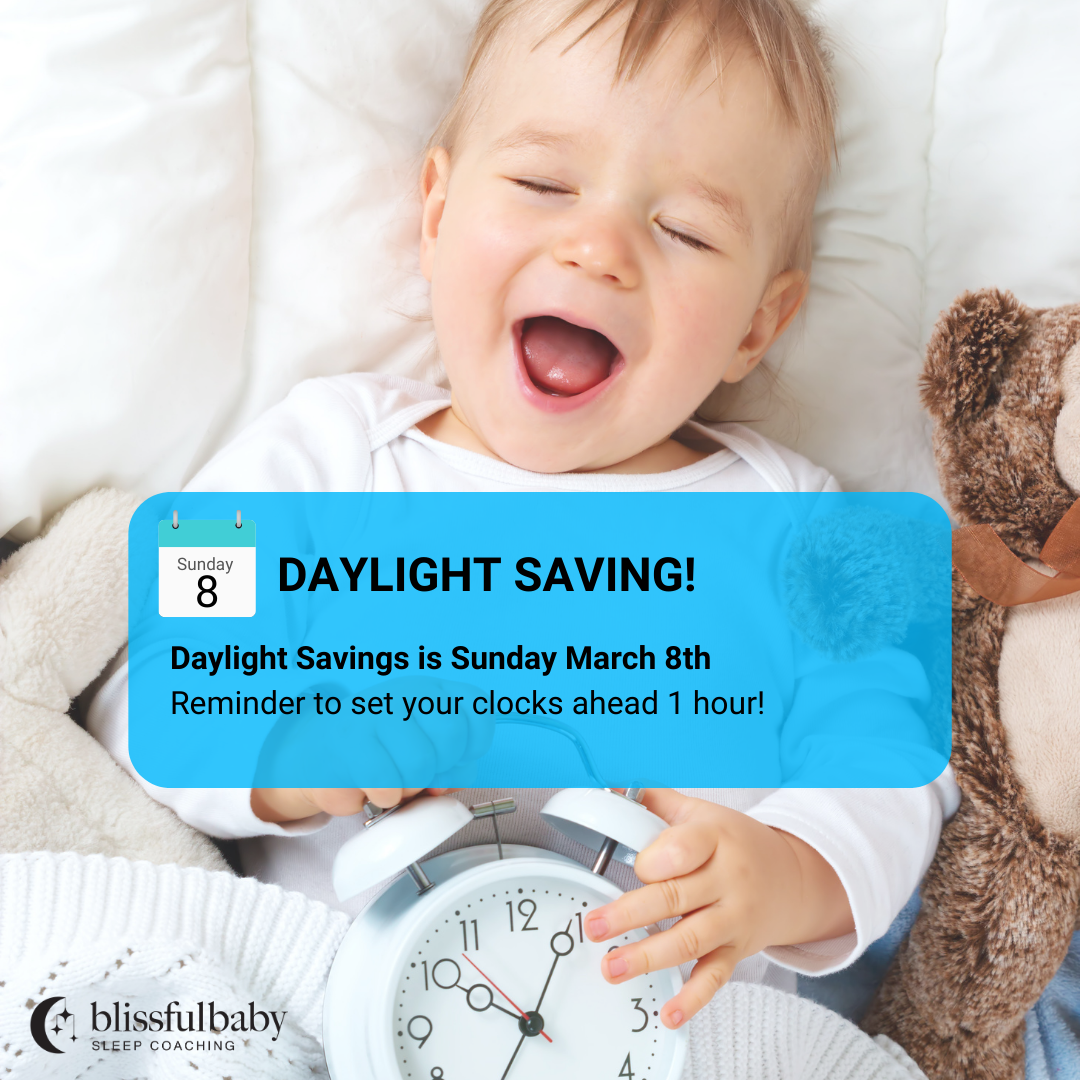
In 2026, Daylight Saving Time begins on Sunday, March 8.
At 2:00 a.m., the clocks move forward one hour.
Which means your child’s 7:00 a.m. wake-up suddenly feels like 6:00 a.m. to their body.
And if you’ve ever lived through spring daylight savings with a baby or toddler, you know: this isn’t “just one hour.”
It can feel like jet lag… without the vacation.
The good news? With a gentle, steady approach, most children adjust within a few days. You don’t need drastic schedule changes, cry-it-out, or rigid sleep boot camps.
Let’s walk through exactly how to handle spring forward 2026, calmly and confidently.
Why Spring Forward Feels Harder Than Fall Back
When we “fall back” in November, children get what feels like extra sleep.
When we “spring forward,” we’re asking their bodies to fall asleep earlier than their internal clock is ready for.
That’s the tricky part.
Your child’s circadian rhythm doesn’t change just because the clock does. For a few days, bedtime may feel too early, mornings may feel too early, and naps can get wobbly.
This is normal.
It’s not a regression. It’s a temporary rhythm shift.
Option 1: Do Nothing (Yes, Really)
If your child is generally a flexible sleeper, you can simply switch to the new clock time on March 8 and allow their body to adjust naturally.
Most children adapt within 3–7 days.
What this looks like:
Bedtime stays the same by the clock.
Wake-up stays the same by the clock.
You protect sleep pressure and keep routines consistent.
You get outside in morning light to help reset their internal clock.
This works especially well for:
Babies under 6 months
Toddlers with solid sleep foundations
Families who prefer minimal schedule tinkering
Consistency is more powerful than perfection here.
Option 2: Gradually Shift Before March 8
If your child is sensitive to overtiredness or early waking, you can shift the schedule slowly in the 4–5 days leading up to Sunday, March 8.
Starting Wednesday, March 4:
Move bedtime 10–15 minutes earlier each night.
Shift naps earlier by the same amount.
Wake your child 10–15 minutes earlier each morning.
By Sunday, you’ll already be close to the new time.
This approach feels gentler for:
Toddlers prone to overtired meltdowns
Babies in the middle of a sleep regression
Children who wake very early
Small shifts protect regulation. Big swings often backfire.
What About Early Morning Wake-Ups?
Spring daylight savings can temporarily cause:
5:00–6:00 a.m. wake-ups
Shorter naps
Extra bedtime resistance
Before assuming something is “wrong,” give it 3–5 days.
To support smoother mornings:
Keep the room dark (blackout curtains really help this time of year).
Don’t start the day before your desired wake time.
Expose your child to natural sunlight within 30–60 minutes of waking.
Keep naps age-appropriate to avoid overtired spirals.
Light is the strongest cue for resetting the body clock.
Should You Use Cry-It-Out for the Transition?
Short answer: no.
There’s no need to overhaul your approach or suddenly introduce extinction methods just because of daylight savings.
Spring forward is temporary.
If your family practices gentle sleep coaching, responsive settling, or a no cry-it-out approach, you can absolutely stay consistent through this shift.
Sleep transitions go more smoothly when children feel secure.
A Gentle Spring Forward Plan by Age
Babies (0–6 months)
Follow wake windows. Protect naps. Use light exposure in the morning. Avoid rigid clock watching.
Babies (6–12 months)
Shift gradually if sensitive. Keep bedtime routine predictable. Offer a slightly earlier bedtime for a few days if needed.
Toddlers & Kiddos (1–5 years)
Prep them verbally:
“The clock is changing. We’ll still sleep when it’s dark.”
Keep boundaries steady. Expect 3–5 days of adjustment.
How Long Does It Take to Adjust?
For most children:
Mild disruption: 2–3 days
More sensitive sleepers: 5–7 days
Rarely longer than 10 days
If sleep struggles persist beyond two weeks, there may be a separate schedule or regression issue—not just daylight savings.
A Calm Reframe for Parents
If March 8 feels stressful, here’s your permission slip:
You don’t have to engineer this perfectly.
You don’t have to fix everything in one night.
You don’t have to panic if bedtime runs late for a few evenings.
Children’s bodies are designed to adapt.
Your job isn’t to control every variable.
It’s to stay steady.
And steady is powerful.
Frequently Asked Questions About Spring Daylight Savings
-
Daylight Saving Time begins on Sunday, March 8, 2026, at 2:00 a.m. Clocks move forward one hour.
-
Possibly for a few days. Their body clock may still be on “old time.” Most adjust within a week
-
If you do nothing, keep bedtime the same by the clock. If shifting gradually before March 8, move bedtime 10–15 minutes earlier for several days.
-
For sleep, yes. Spring forward asks children to fall asleep earlier than their internal rhythm prefers.
Are you struggling with sleep after the time change?
If has been 2 weeks and you are still having issues, it might be time for “Sleep Tune-Up” time and you can fill out this form and state you need a sleep tune up call ($150 for 30 min)