
Enter any keyword(s) to search our Blogs.
Spring Daylight Savings 2026: How to Gently Help Your Child Adjust When We “Spring Forward”
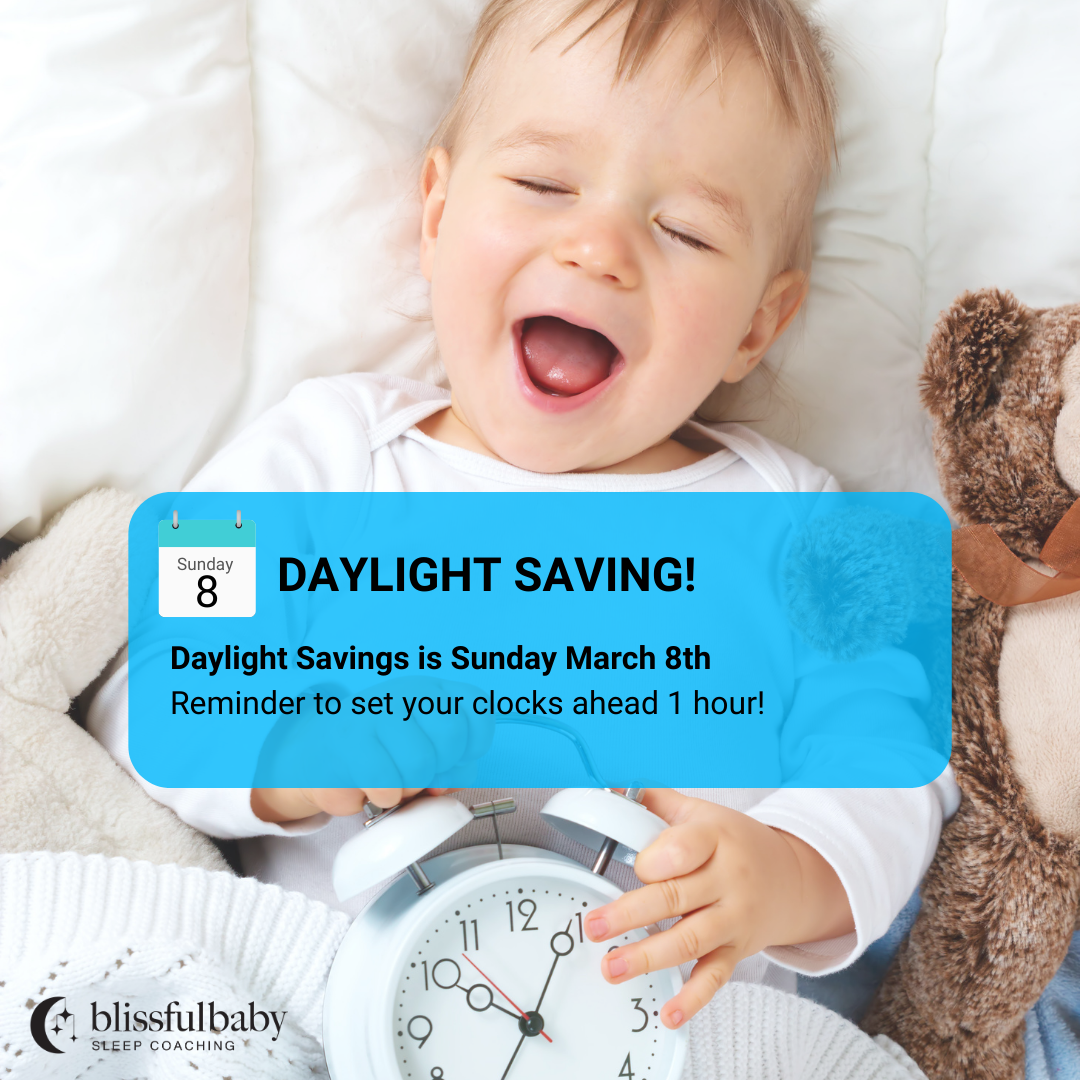
In 2026, Daylight Saving Time begins on Sunday, March 8.
At 2:00 a.m., the clocks move forward one hour.
Which means your child’s 7:00 a.m. wake-up suddenly feels like 6:00 a.m. to their body.
And if you’ve ever lived through spring daylight savings with a baby or toddler, you know: this isn’t “just one hour.”
It can feel like jet lag… without the vacation.
The good news? With a gentle, steady approach, most children adjust within a few days. You don’t need drastic schedule changes, cry-it-out, or rigid sleep boot camps.
Let’s walk through exactly how to handle spring forward 2026, calmly and confidently.
Why Spring Forward Feels Harder Than Fall Back
When we “fall back” in November, children get what feels like extra sleep.
When we “spring forward,” we’re asking their bodies to fall asleep earlier than their internal clock is ready for.
That’s the tricky part.
Your child’s circadian rhythm doesn’t change just because the clock does. For a few days, bedtime may feel too early, mornings may feel too early, and naps can get wobbly.
This is normal.
It’s not a regression. It’s a temporary rhythm shift.
Option 1: Do Nothing (Yes, Really)
If your child is generally a flexible sleeper, you can simply switch to the new clock time on March 8 and allow their body to adjust naturally.
Most children adapt within 3–7 days.
What this looks like:
Bedtime stays the same by the clock.
Wake-up stays the same by the clock.
You protect sleep pressure and keep routines consistent.
You get outside in morning light to help reset their internal clock.
This works especially well for:
Babies under 6 months
Toddlers with solid sleep foundations
Families who prefer minimal schedule tinkering
Consistency is more powerful than perfection here.
Option 2: Gradually Shift Before March 8
If your child is sensitive to overtiredness or early waking, you can shift the schedule slowly in the 4–5 days leading up to Sunday, March 8.
Starting Wednesday, March 4:
Move bedtime 10–15 minutes earlier each night.
Shift naps earlier by the same amount.
Wake your child 10–15 minutes earlier each morning.
By Sunday, you’ll already be close to the new time.
This approach feels gentler for:
Toddlers prone to overtired meltdowns
Babies in the middle of a sleep regression
Children who wake very early
Small shifts protect regulation. Big swings often backfire.
What About Early Morning Wake-Ups?
Spring daylight savings can temporarily cause:
5:00–6:00 a.m. wake-ups
Shorter naps
Extra bedtime resistance
Before assuming something is “wrong,” give it 3–5 days.
To support smoother mornings:
Keep the room dark (blackout curtains really help this time of year).
Don’t start the day before your desired wake time.
Expose your child to natural sunlight within 30–60 minutes of waking.
Keep naps age-appropriate to avoid overtired spirals.
Light is the strongest cue for resetting the body clock.
Should You Use Cry-It-Out for the Transition?
Short answer: no.
There’s no need to overhaul your approach or suddenly introduce extinction methods just because of daylight savings.
Spring forward is temporary.
If your family practices gentle sleep coaching, responsive settling, or a no cry-it-out approach, you can absolutely stay consistent through this shift.
Sleep transitions go more smoothly when children feel secure.
A Gentle Spring Forward Plan by Age
Babies (0–6 months)
Follow wake windows. Protect naps. Use light exposure in the morning. Avoid rigid clock watching.
Babies (6–12 months)
Shift gradually if sensitive. Keep bedtime routine predictable. Offer a slightly earlier bedtime for a few days if needed.
Toddlers & Kiddos (1–5 years)
Prep them verbally:
“The clock is changing. We’ll still sleep when it’s dark.”
Keep boundaries steady. Expect 3–5 days of adjustment.
How Long Does It Take to Adjust?
For most children:
Mild disruption: 2–3 days
More sensitive sleepers: 5–7 days
Rarely longer than 10 days
If sleep struggles persist beyond two weeks, there may be a separate schedule or regression issue—not just daylight savings.
A Calm Reframe for Parents
If March 8 feels stressful, here’s your permission slip:
You don’t have to engineer this perfectly.
You don’t have to fix everything in one night.
You don’t have to panic if bedtime runs late for a few evenings.
Children’s bodies are designed to adapt.
Your job isn’t to control every variable.
It’s to stay steady.
And steady is powerful.
Frequently Asked Questions About Spring Daylight Savings
-
Daylight Saving Time begins on Sunday, March 8, 2026, at 2:00 a.m. Clocks move forward one hour.
-
Possibly for a few days. Their body clock may still be on “old time.” Most adjust within a week
-
If you do nothing, keep bedtime the same by the clock. If shifting gradually before March 8, move bedtime 10–15 minutes earlier for several days.
-
For sleep, yes. Spring forward asks children to fall asleep earlier than their internal rhythm prefers.
Are you struggling with sleep after the time change?
If has been 2 weeks and you are still having issues, it might be time for “Sleep Tune-Up” time and you can fill out this form and state you need a sleep tune up call ($150 for 30 min)
Fall Daylight Saving Time: How to Help Your Baby Adjust to the Time Change
The end of Daylight Saving Time can feel like a gift for adults—but for babies and toddlers, that one-hour shift can throw off sleep schedules, naps, meals, and early morning wake-ups.
If you're wondering how to help your baby adjust to the fall time change, you're not alone.
The good news? With a little planning, most children can transition smoothly.
Whether your baby is an early riser, taking multiple naps, or already sleeping independently, these gentle strategies can help your family adjust with less stress.
Why Does the Time Change Affect Children?
Children thrive on predictable rhythms.
Although the clock changes overnight, their internal body clock doesn't.
That means a child who normally wakes at 6:30 a.m. may suddenly start waking at 5:30 a.m.
Fortunately, exposure to morning light, consistent meal times, naps, and bedtime routines all help reset the body's circadian rhythm.
When Is Daylight Savings
Sunday, November 1, 2026
Understanding the Impact of Daylight Saving Time on Your Child
Daylight Saving Time affects everyone's internal body clock, including your child's. Young children are especially sensitive to changes in routine and sleep patterns, so it's essential to prepare for the upcoming shift. Here's how DST can impact your child's sleep:
1. Sleep Schedule Disruption: The time change can lead to temporary confusion for your child's internal clock, which may result in changes in their sleep schedule. This could manifest as early wake-ups or difficulty falling asleep at bedtime.
2. Circadian Rhythm Adjustment: Your child's circadian rhythm, the internal clock that regulates sleep and wake cycles, may take a few days to adjust to the new time. During this period, you might notice changes in their behavior, energy levels, and mood.
3. Naptime Challenges: Daylight Saving Time can also affect your child's daytime naps. If your child is used to napping at specific times, you may need to adjust their nap schedule to accommodate the time change.
Watch My Fall Time Change Tips Video
Tips for a Smooth Transition
Now that you understand the potential challenges, let's explore some gentle sleep coaching strategies to help your child adapt to the fall time change:
1. Gradual Adjustments: Begin making minor adjustments to your child's sleep schedule a few days before the time change. Shift bedtime and wake-up times FORWARD by 15 minutes every day until you've reached the new schedule.
For example, let's pretend your child's normal bedtime is 7:00pm. Shift their bedtime 15 minutes LATER each day. Here is what the change would look like over a 4 day period. It is important to shifts naps and meals by the same 15 minute increments.
Wednesday 7:15pm
Thursday 7:30 pm
Friday 7:45 pm
Saturday 8:00pm
Sunday is FALL BACK DAY TO 7:00 pm (This will be the time after the time change)
2. Maintain a Consistent Routine: Stick to your child's usual bedtime routine to provide a sense of security and predictability. Consistency is key during transitions.
3. Optimize the Sleep Environment: Ensure that your child's sleep environment is conducive to rest. Dim the lights in the evening and keep the bedroom cool, dark, and quiet.
4. Natural Light Exposure: Encourage natural light exposure during the day, especially in the morning before 10AM. Daylight helps regulate your child's internal clock.
5. Darkness: Do not expose them to light or food before 6am to avoid cementing early rising behavior. Click here to read my blog on early rising.
5. Be Patient: Understand that it may take a few days or even a week for your child to fully adjust to the new schedule. Be patient and provide comfort as needed during this transition.
6. Know your child’s daily sleep requirements. Children go through many stages of development and with that their daytime sleep goals change and same with night time sleep goals. The Fall Time change is a good time to re-evaluate your child’s age and stage sleep goals. Download the Free Guide: How Much Sleep Does My Child Need?
7. Offer Comfort and Reassurance: If your child has difficulty falling asleep or wakes up earlier than usual, offer comfort and reassurance. Gentle sleep coaching techniques can help them learn to self-soothe and adjust to the changes.
Daylight Saving Time can pose challenges for families, but with the right approach and a gentle touch, you can ensure a smooth transition for your child. If you'd like personalized guidance or have specific questions about helping your child adapt to the time change, don't hesitate to reach out to me. Here's to a restful and rejuvenating fall as we turn the clocks back and embrace the cozy season ahead.
I AM OFFERING FALL SLEEP TUNE UP SESSIONS IF THIS TIME CHANGE CAUSES HAVOC IN YOUR HOUSEHOLD
DO YOU WANT EXPERT SLEEP ADVICE FOR YOUR UNIQUE SITUATION? Please complete this intake form and I will be in touch within 24 hrs to send you the links to schedule ($150 for 30 min)
Frequently Asked Questions
-
Most babies adjust within three to seven days. Some adapt almost immediately, while others—especially sensitive sleepers—may need up to two weeks.
-
Many families find success shifting bedtime by 10–15 minutes each day during the week leading up to the time change. Others prefer making the adjustment all at once. The best approach depends on your child's temperament and sleep habits.
-
Your baby's internal body clock hasn't adjusted to the new time yet. Morning light, consistent routines, and patience can help move wake-up time later over several days.
-
Yes. Because naps are linked to your baby's circadian rhythm and sleep pressure, they may temporarily shift after the time change. Maintaining a consistent routine helps babies adjust more quickly.
-
Not usually. While there may be a few days of adjustment, most babies settle into the new schedule with consistent routines and age-appropriate wake windows.
Are you struggling with your child's sleep?
The first step to see if I can help you achieve beautiful, blissful sleep is to schedule a 60 minute ZOOM sleep strategy session. Go to this link and complete the contact me form and I will be in touch within 24 hours with directions on how to schedule your Sleep Strategy Session.
If you are still wondering if I can help, please know I do NOT advocate 'cry-it-out'. I am a Gentle Sleep Coach. If you want to learn about my guilt-free and gentle process, please go to these links.
The Blissful Baby Stairway to Sleep
Please join my Sleep is Bliss Tribe in Facebook, Instagram and LinkedIn so we can stay connected and you can continue to get amazing resources on sleep and family wellness.
Wishing your family peaceful nights and joyful mornings in the midst of this seasonal change.